

Up to - 63%
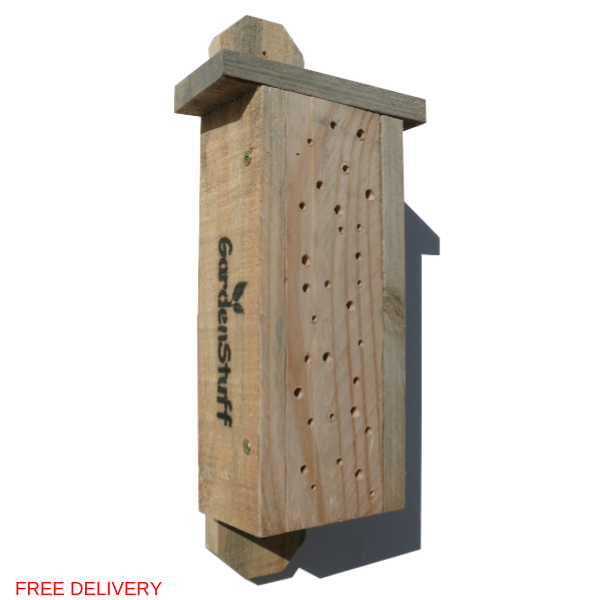
The Solitary Bee Sanctuary (non-flooding cells)
$ 24.92
Description �� Did you know? Most South Africans are unaware that there are over 1.000 known species of bees in our country (and about 20.000 species worldwide). In South Africa, bee abundance and diversity are dwindling, hence the need to lend a helping hand. It is well-known that bee pollination is essential for the development of fruits, vegetables, and seeds. Without bees, the agricultural industry would collapse, and the human race would be in serious trouble. A few bee species live in colonies and produce honey; these include honey bees and Mopani bees. Our country’s vast majority of bees are ‘solitary bees’ (Hymenoptera) because they make individual nest cells for their larvae. Many solitary bees are tiny, and you may not realise they are bees. Solitary bees are far more efficient pollinators than honey bees. Solitary bees are harmless and not aggressive. They are either stingless or unlikely to sting, making them safe around children and pets. Solitary bees usually create nests in hollow reeds, twigs or holes in wood. GardenStuff’s bee hotels provide these desperately needed nesting hollows. �� What is a Bee Hotel? It is a human-made structure that provides solitary bees with a safe place to rest and breed. A bee hotel will not attract honey bees. Honeybees require different nesting structures. A bee hotel is a bee’s permanent home for eleven months of its short life as it develops from an egg through a larval stage, then as a dormant pupa, and finally emerges as an adult. To enjoy the hotel and the activity, hang it at eye level or lower if the children want to get involved. Find a dry spot in dappled sunlight, a bright, shaded area, or an area that receives only early-morning sunlight (not direct sunlight, as that will be too hot). Hang it where you can see it and enjoy it. Take pride in knowing that you are making a valuable contribution to the protection and conservation of our bees. �� What is happening inside the Bee Hotel? Most pollen and nectar bees gather from visiting flowers in the gardens to feed their larvae. This time is the main feeding stage for developing bees, as they do not grow significantly after emerging from the pupa. Adult bees ingest only small quantities of food. One can take a close peep at the tunnels to see what’s happening inside. Don’t worry; solitary bees will not come out and attack. �� Where to put your Bee Hotel? One should not position the bee house in permanent shade or continuous sun. Solitary bees are cold-blooded and rely on the sun’s heat to warm them up in the morning. It is unlikely to be used if you site your bee hotel in the shade or hidden behind thick vegetation. One should firmly fix a bee house so that it does not swing or sway in the wind; you should not hang it from a branch. If possible, find a spot that has some protection from the rain. Endless winter wet, not cold, is their enemy. �� Will any Bee Hotel do? In light of public concern about sudden bee declines, as reported in the media, many horticultural suppliers are now offering commercially made wooden bee houses (also called condos or bee traps). Sadly, many of them are inadequate for several possible reasons: Many bee hotels are ornamental rather than functional, designed to appeal to human aesthetics rather than to benefit solitary bees. They offer insufficient protection from wet weather. Rain floods the chambers, drowning the occupants. The holes are too large because they were made abroad to accommodate species that do not live in our country. Tunnels have splinters inside. Bees will avoid those to prevent damage to their wings. Tubes have no solid back wall and are only open-ended wind tunnels. They contain glass or plastic tubes, which cause condensation and fungal moulds. Some bee houses are too large. Many bee species will not live near each other. It is better to spread some smaller bee houses around the garden than to have one big hotel. One should avoid bee houses with dozens of chambers, as parasitic insects and mites easily prey on larger numbers of nearby solitary bees. Some bee hotels contain plywood, chipboard, particleboard, plastic or cardboard. Those bee nests are not suitable. Many bee houses are made to hang from a branch or hook and cannot be firmly attached. Bees do not like swinging nests. Approximate Dimensions: 49 cm (h) x 17 cm (w) x 11 cm (d) Weight: ± 2 kg Animal shelters and feeders are non-returnable for biosecurity reasons.
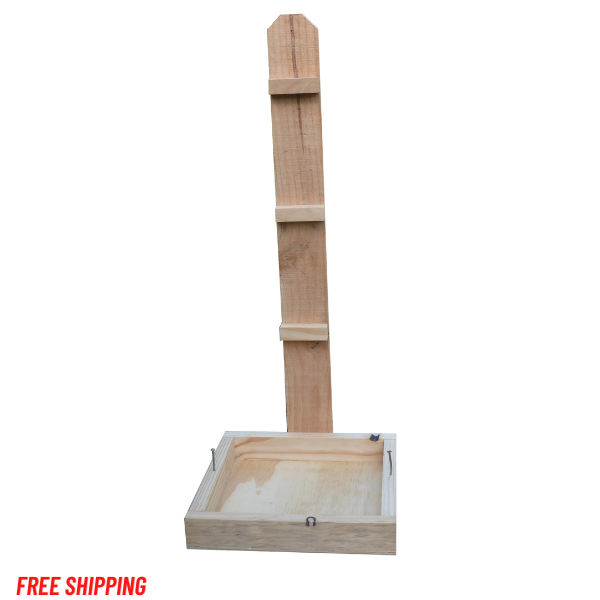 Bird & Squirrel Feeder
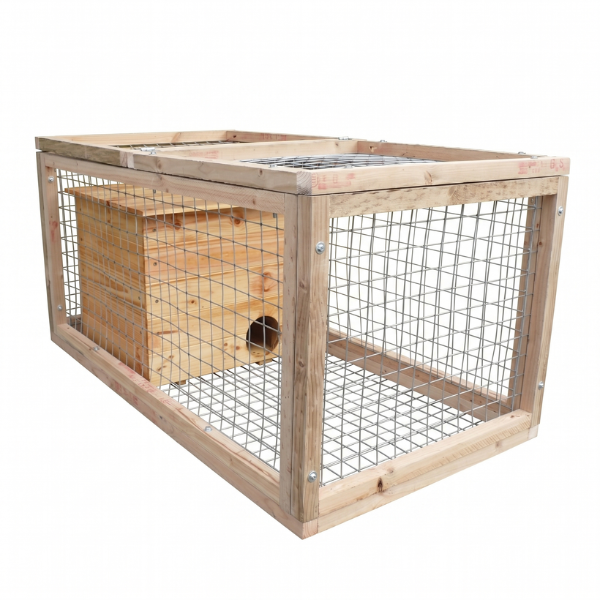 Safety Cage ‘Fort Knox’
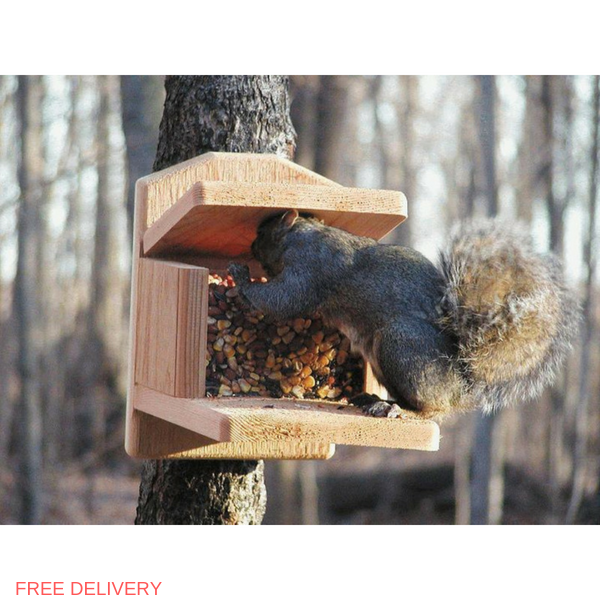 Squirrel Feeder ‘Munch Box’
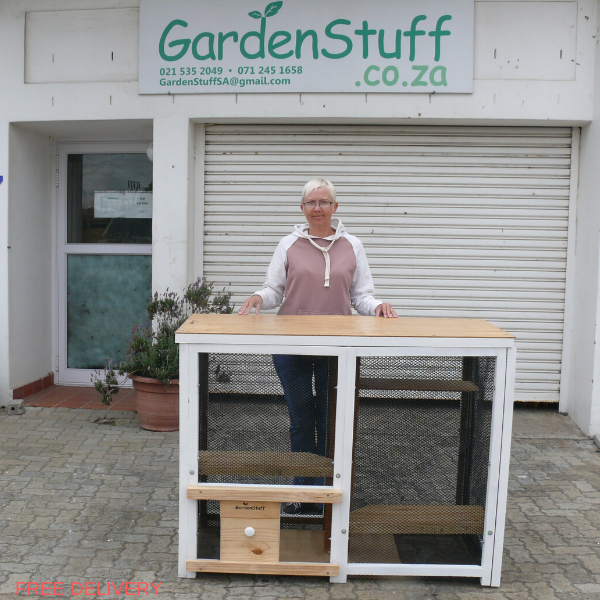 Cat Safe House ‘Mini’